
Browse a Burlingame Street by Address
A Burlingame street directory works because four kinds of evidence sit side by side. A parcel map ties a street to an APN and an assessed owner. The recorder links that name to a deed. Voter rolls add narrow context. A reverse directory can place an earlier subscriber at an old number. San Mateo County holds most of these records. City, state, and library sources fill the gaps. Keep ownership, mailing, occupancy, and historical presence distinct. Anyone who wants to find who lives on a street in Burlingame should treat each name as a lead. Records must agree before a name counts. This residents directory keeps the four kinds of evidence apart.
- Normalize the address. Check the delivery address with the USPS address lookup, then confirm whether the parcel is in Burlingame, Hillsborough, or unincorporated Burlingame Hills. The city street-system information helps separate city, county, and Caltrans maintenance geography.
- Find the parcel. Use San Mateo County Property Maps with the street address. Save the APN and any assessor or subdivision map links returned.
- Walk the map. Open the San Mateo County GIS viewer, select the subject parcel, and inspect adjoining polygons and the City and ZIP layers.
- Trace the owner. Search the current assessed owner in the county's free grantor-grantee index. The deed chain uses party names and legal descriptions rather than a simple street browse.
- Add limited people evidence. Use voter information only through a lawful self-lookup or qualified file request. For earlier occupants or subscribers, ask a library or historical repository for reverse or criss-cross directories.
The task changes once a street search turns toward confirming one named person. County court, vital, and identity records demand a different set of checks. A Burlingame street directory search should stop before a property clue becomes a personal claim no record supports.
Turn a Burlingame Address into an APN
San Mateo County's Property Maps instructions describe four search modes. The address and APN routes are the practical starting points for a Burlingame street directory. They tie a visible location to the county parcel system directly. Book-and-page and volume-and-page searches help when an older assessor map is already in hand. They also work for a recorded subdivision map.
| Search mode | Input | Result or next action |
|---|---|---|
| Find parcels by ADDRESS | Street address | Search, select the parcel, then open Assessor Map or All Available Recorded Maps. |
| Find parcels by APN | Assessor parcel number | Search, then choose an assessor map or recorded map. |
| Assessor Maps | Book and page | Retrieve the map name and download the available map. |
| Parcel/Subdivision Maps | Volume, then page | Select Next, identify the map name, and open the recorded map. |
An APN is an assessor locator. It is not the legal description itself. A recorded map connects the parcel to a lot, block, subdivision, or other formal geometry. Save the map date and the APN together. A lot split or merger can change the parcel identifier, while the street address stays familiar. San Mateo County's public property pages do not advertise an unrestricted owner-name web search. For Burlingame parcels, address and APN are the more dependable entry fields. A broad name query is weaker ground for a residents directory lookup.
Read Burlingame Parcels in County GIS
The county GIS viewer adds geography that a property card cannot show alone. Accept its disclaimer first. Then search an address or APN. Zoom until parcel lines appear. Click the parcel to open its attributes. Layer controls can add active parcel APNs, situs-number labels, city boundaries, ZIP codes, election precincts, and legislative districts. Assessor maps, parcel maps, and subdivision maps are available as layers too. The San Mateo County parcel GIS viewer is a strong visual companion. A Burlingame street directory benefits from it most. The county GIS resources page supplies broader property and open-data context. A researcher can pan along both sides of a street. The viewer can record adjoining APNs. Each parcel record opens separately. GIS adjacency beats a ZIP code filter for precision. Even so, it stays informational and is not a legal survey.
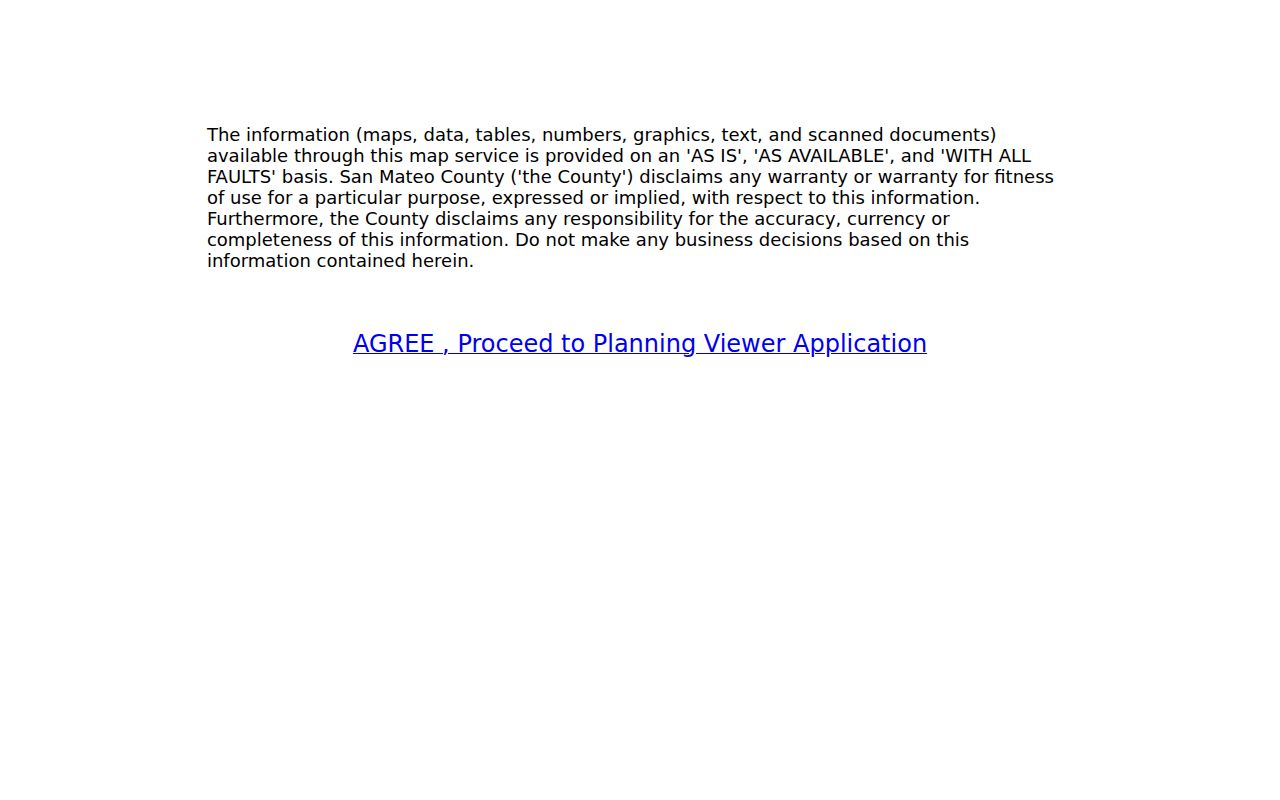
Think of the parcel view as a starting point rather than a final answer. It shows how a street, the city line, a ZIP layer, and a district boundary sit against one another, which helps narrow a street directory search before any office visit. Once the map points to the right parcel, the assessor and the recorder hold the records that settle the question.
Separate Burlingame Situs from Mailing
Address terms mean different things in Burlingame records. The physical location is one fact. The tax correspondence destination is another. The legal description is a third, related but distinct. A careful street directory uses the terms below before comparing an owner, a deed, a permit, or an older directory entry.
- Parcel
- A county assessor unit identified by an APN. It may contain one structure, several structures, or land whose record history differs from the current street label.
- Situs address
- The physical location of the property. It is the address to use when locating the parcel and checking the city or unincorporated jurisdiction.
- Mailing address
- The destination for tax or other correspondence. It can differ from the situs and does not prove where an owner lives.
- Plat
- A recorded map that lays out lots, blocks, streets, easements, or subdivision relationships. It helps explain an older legal description.
- Criss-cross directory
- A reverse directory section arranged by street and house number, usually showing a historical subscriber or occupant instead of starting with a surname.
One house can carry a situs in Burlingame, a mailing address elsewhere, and a legal description naming an older subdivision. These differences are clues to reconcile. They are not errors to erase from a residents directory search.
Burlingame Street Directory Records by Address
Address-keyed records form the working spine of a Burlingame address guide, yet each keeper supplies a different layer. The table separates what can be found by address from what needs an APN, a name, a request, or a historical shelf.
| Address-keyed record set | Keeper | What it shows | Access and limit |
|---|---|---|---|
| Property Maps and tax roll | San Mateo County ACRE Assessor | APN, assessed owner, values, exemptions, mailing address, map links | Free online viewing; official map copies are available at the counter. |
| GIS parcel layer | San Mateo County GIS | Parcel geometry, city, ZIP, districts, precincts, adjoining parcels | Free viewer; informational map, not a legal survey. |
| Assessment roll summaries | ACRE Assessor | Annual secured, unsecured, and combined roll summaries | Current page reaches at least 2018-19; it is not a household roster. |
| Recorded deeds and liens | ACRE Recorder Division | Grantor, grantee, document type, recording date, number, page count | Free index; images are excluded online and require copy or counter access. |
| Permits and code cases | City of Burlingame | Owner or applicant, contractor, work scope, notices, disposition, dates | Current systems and requests; privacy and investigation limits apply. |
| Voter registration evidence | San Mateo County Elections and California SOS | Self-lookup status, precinct, and approved file fields | Self-match or qualified purpose only; no anonymous street roster. |
| Reverse directory | Burlingame Library and historical repositories | Historical subscriber or occupant by street and number | Exact holdings and years require shelf confirmation. |
The table's order matters. Property Maps and GIS locate the parcel. The assessment roll supplies ownership clues. Deeds explain transfers, permits date work, voter information stays purpose-controlled, and a reverse directory adds an earlier household layer. A residents directory match grows stronger when two independent record types agree, though they should never be treated as identical evidence. The ACRE assessment roll summaries show the county's public roll structure and annual summary categories.
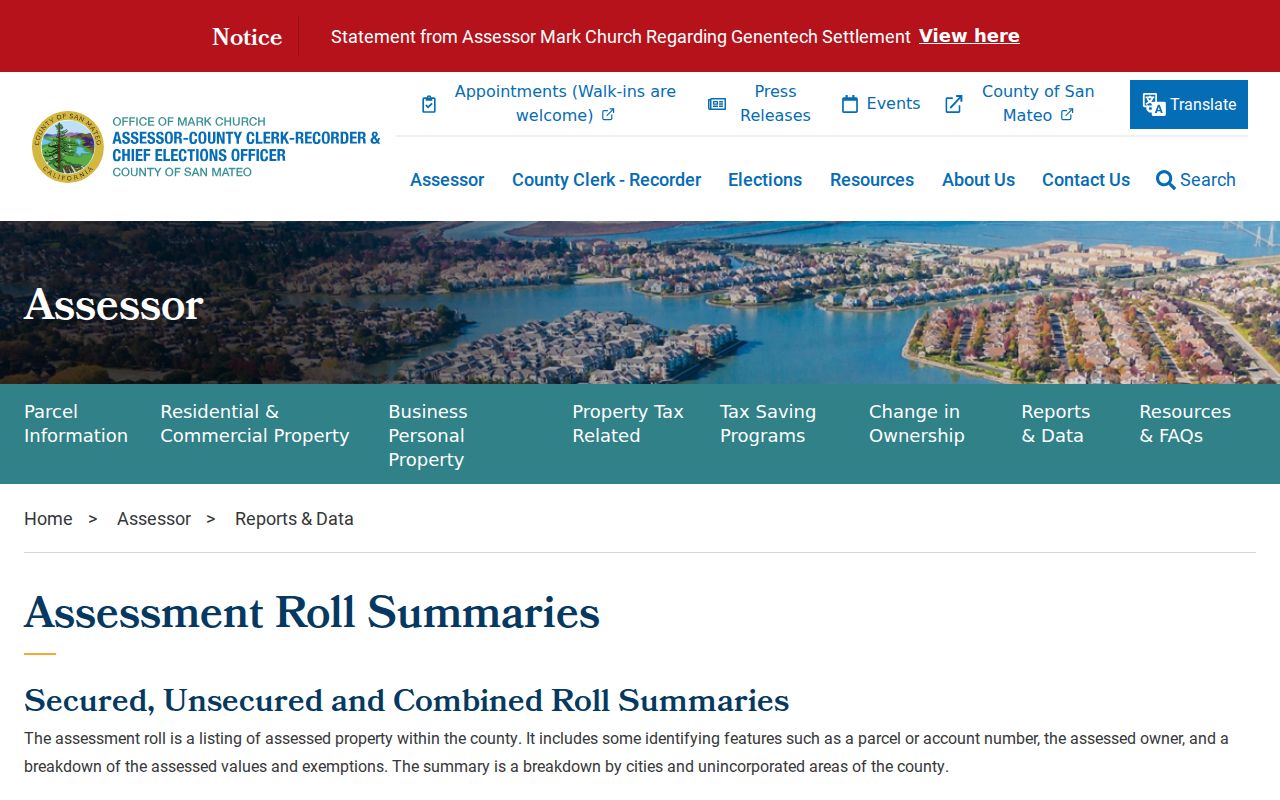
That assessment view belongs beside the parcel card. It does not replace it. An assessed owner or exemption entry is a property record, but occupancy and household composition need separate, lawful evidence of their own. Note: An assessed owner, mailing address, or permit applicant is evidence about a property record, not proof that a particular person lives there.
Trace Burlingame Deeds by Owner
San Mateo County lets anyone search its grantor-grantee index for free. It is only an index, though. Deed images stay offline on purpose. The official search page gives no first online year. Enter the owner name, try spelling variants. Read each hit as a pointer toward a recorded instrument. For a copy, the ACRE recorded-document copy instructions explain the next step.
Tracing ownership works like a chain. Start with the current assessed owner. From there, find the likely acquisition deed, then jump to the seller's own earlier purchase. In each copy, note the grantor and grantee roles, vesting, the legal description, the recording number, and return details. Street addresses rarely control here. Keep the APN, subdivision, lot description, and party names together as one bundle. That discipline keeps a Burlingame deed trail from collapsing into guesswork.
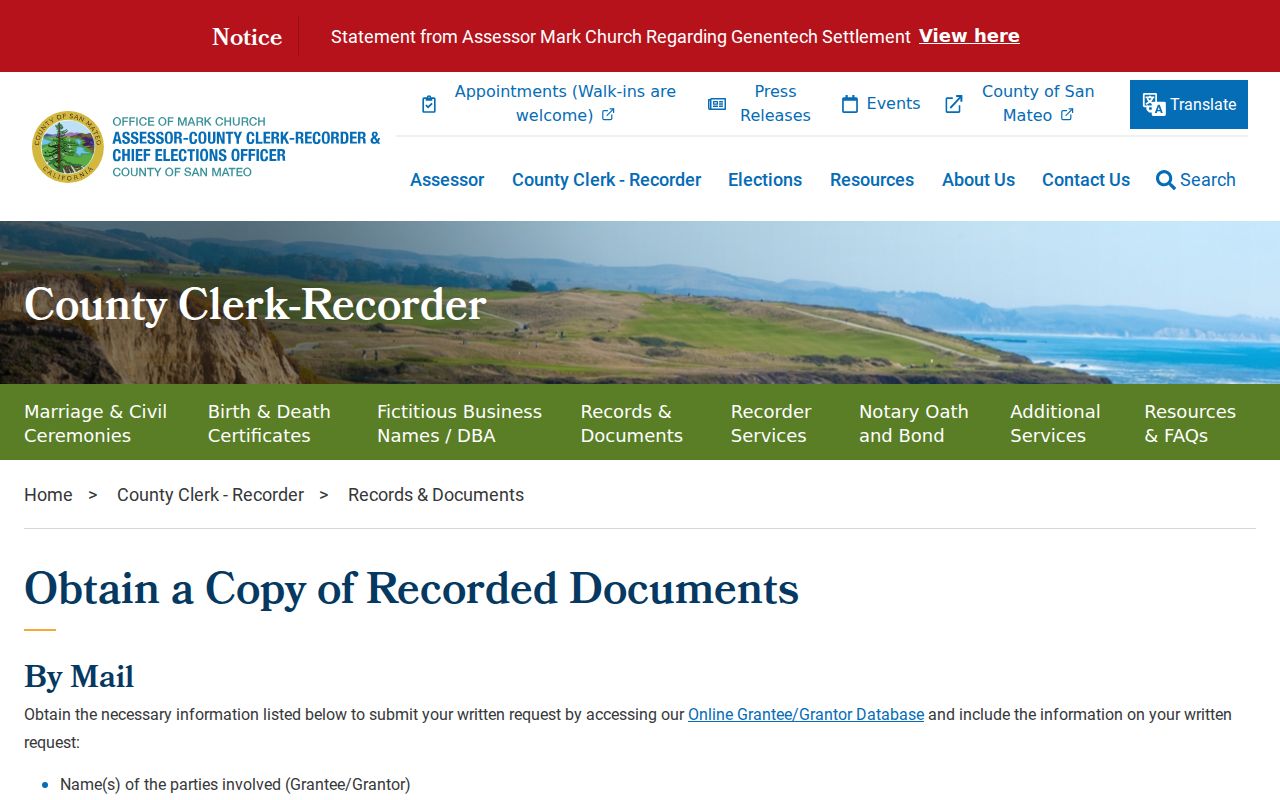
Mail orders to the recorder need party names, document type, recording date, recording number, payment, and a self-addressed stamped envelope. The county takes a preprinted U.S.-bank check, money order, or cashier's check payable to the San Mateo County Clerk-Recorder. Fees vary by page count. The official copy page does not list a current per-page amount, so expect to confirm the cost before mailing anything. Walk-in service is another route. Public terminals and the counter sit at 555 County Center in Redwood City, with map-copy service listed Monday through Friday, 8 a.m. to 5 p.m.
One caution belongs here. A deed grantee is not automatically a resident. The purchased image proves only what the instrument records. Calling a person a current occupant of a Burlingame address takes independent support and a lawful reason to use it.
Burlingame Permits Date Buildings
Permit and code files put a time line on a Burlingame street. They never form a resident roll. A single permit can list an owner, applicant, contractor, architect, scope of work, valuation, parcel, dates, and inspection status. Applicants often act as agents. So read a permit name as participation in a project, not as proof anyone lived there.
The city's permit resources cover current services. The Document Center offers date and folder filters for digging deeper. Older scans may need a request for a historic permit jacket tied to the address or APN. Code Compliance can supply a case log, notices, photographs, and final disposition. Complainant contact data and active-investigation material may be withheld.
- Ask for the address and APN together when a street label may have changed or a parcel has been split.
- Separate construction, alteration, demolition, and inspection dates from the date a person was associated with the property.
- Use the City Clerk's Laserfiche public-records portal for an existing record series when a current index does not answer the question.
The city's Laserfiche portal opened in January 2021. Records predating it often need a California Public Records Act request. Name the department, the address or APN, and the date range. Also list the record type and the format you want. Under Government Code section 7922.535, Burlingame generally decides within ten calendar days whether disclosable records exist. Production can run longer and exemptions still apply. Inspection is ordinarily free, with copies charged at direct duplication cost.
Note: A records request can surface an existing permit or case series. It cannot force the city to build a new street resident directory.
Easton Joins the Burlingame Street Story
Street research in Burlingame carries an alternate-locality problem. San Mateo County dates to 1856. Before that, land history sits in San Francisco County records. It also sits in Rancho San Mateo, Rancho Buri Buri, mission files, Mexican land-grant papers, and federal land-confirmation records. That is why an early deed may describe a ranch, tract, or lot. It may not give a modern street number. The Burlingame history record fills in the rest of the story. So do Town Map No. 1 dated March 15, 1897, the 1908 incorporation, and later subdivision maps.
Easton annexed to Burlingame in 1910. Thirty-five more subdivisions or annexations were recorded from 1912 through 1963. The Mills Estate division of 1954 split land between Burlingame and Millbrae. Each change could relabel the jurisdiction without touching the house number. So when a modern Burlingame query comes back empty, search Easton. Also search San Mateo County and the subdivision name.
County scale offers a useful reality check. For 2025-26, ACRE reported 234,263 parcels or accounts. It reviewed 20,321 deeds for ownership transfers. It also processed 16,894 building permits. Those numbers describe a large county system behind a compact Burlingame street directory. They do not promise that every historical address is online.
No official source publishes a citywide house-number renumbering date or a ZIP realignment year. Compare maps, deeds, permits, and directories case by case. Claiming one clean reset for all Burlingame streets would overstate what the records support.
Use Burlingame Reverse Directories Carefully
A reverse directory, sometimes called a criss-cross, flips the usual name-first search. It sorts by street and house number. Then it shows a subscriber or occupant for a given year. That historical layer can bridge a property to a household between census dates. The exact Burlingame publisher and year runs, however, do not appear in official online material.
Several collections are worth asking about. Start with the San Mateo County Libraries genealogy resources. The Burlingame Main Library reference desk is another good stop. So are the San Mateo County Historical Association and the Burlingame Historical Society. Request San Mateo County, Peninsula, telephone, and city directories by name. That works better than hunting only for a catalog title that says Burlingame.
- Search the Peninsula Library System catalog for Burlingame directory, San Mateo County directory, Polk San Mateo, telephone directory Peninsula, and reverse directory San Mateo.
- Request the abbreviation key or catalog notes before interpreting a one-letter mark beside an address.
- Record the volume title, publication year, page, repository, and whether the entry is alphabetical or street-ordered.
A missing entry can mean many things. The year saw no publication, and the canvass missed the house. No telephone was listed, or a spelling drifted. A married name changed, or the family simply moved. An absence alone never proves someone left Burlingame. For the collections and reading methods, the Burlingame city directory page goes into fuller detail.
Note: No complete Burlingame publisher-year shelf list exists online. Staff confirmation at the library and Historical Society remains necessary.
Why Burlingame Voters Are Not Street-Searchable
A Burlingame street directory built from voter data does not exist. California keeps its voter rolls off-limits to that kind of browsing. San Mateo County's lookup tool will not even open a record without a registered house number. It also requires a five-digit ZIP code and an exact birth date. The state's My Voter Status works the same way, returning party preference, districts, and ballot details only after a voter authenticates. A voter must first provide identifying information. Nobody can type in a Burlingame street. No public roster of who votes there will appear.
| House Number | Required number as registered for the county self-lookup. |
|---|---|
| ZIP Code | Required five-digit registration ZIP code. |
| Birth Date | Required exact date for the self-match. |
| Search result | Registration information for the authenticated match, not a street-wide roster. |
For field rules, the county voter-registration FAQs spell out what each lookup requires. For a personal status check, use California My Voter Status. Questions can reach San Mateo County Elections at 40 Tower Road, San Mateo, by phone or text at 650-312-5222, or by email at registrar@smcacre.gov. The state options are 800-345-8683 and elections@sos.ca.gov. Elections Code section 2194 keeps the voter file closed to most requesters. Access is limited to election, scholarly, journalistic, political, and governmental purposes, and commercial use counts as a misdemeanor. A qualified applicant can take the state voter-file request route for a statewide file at $100. A single-voter request covers up to ten named voters at $30 each, with a $100 cap. County fees vary. A released file may include residence and mailing addresses, precinct, districts, party preference, and participation history. Ballot choices stay sealed. So do driver-license numbers, Social Security numbers, and signatures.
What a Burlingame Street Directory Cannot Show
No Burlingame street directory, however complete, captures everyone tied to an address. The parcel roll can miss non-owner occupants and other household members. Some data never becomes a neighborhood field at all. Utility accounts sit outside public view. Delivery records do too. DMV address information and confidential voter records stay sealed as well. Participants in Safe at Home rely on a substitute mailing address and confidential voter procedures. For that reason, their protected location should never be pieced together from public clues. Code complaints raise similar blind spots. A reporting party may be withheld entirely. A business filing may list only an operating or agent address. A tax mailing address may point to a correspondence location rather than the property itself. The federal Driver's Privacy Protection Act, 18 U.S.C. sections 2721-2725, adds limits of its own. It restricts how motor-vehicle personal data can be shared. When a record is withheld, ask the custodian about segregable public portions. That path beats trying to reconstruct a protected field from elsewhere.
Lawful use. Burlingame property and address records can support personal, lawful research, family history, house history, or civic curiosity. Using record information to stalk, harass, threaten, or intimidate another person is unlawful, and protected addresses must not be sought or republished.
When the search narrows to one named person, shift to the Burlingame resident lookup approach. Verify two independent records there. A single hit proves little on its own. Keep a parcel clue, voter status, directory entry, or deed hit in its proper category. None of it should harden into a claim about a private household.